Protect Occupants in High-Use Commercial Buildings
Scalable radon mitigation systems for apartment complexes, schools, and large commercial properties in Northeast, WI.
Commercial properties with multiple occupied spaces, shared ventilation systems, and complex foundation layouts require mitigation systems designed to handle higher airflow demands and zoning challenges. Radon Safe Homes and Businesses installs systems for apartment buildings, schools, office complexes, and institutional facilities where radon testing has identified elevated levels and compliance or occupant safety is a concern. These systems are built to run continuously, handle multi-zone foundations, and integrate with existing HVAC and mechanical infrastructure without disrupting daily operations.
The service includes coordination with facility managers, administrators, and maintenance teams to plan installation timing, minimize disruption, and ensure the system meets both performance and code requirements. Radon Safe Homes and Businesses works with properties that have basements, slab foundations, and crawl spaces, as well as buildings where previous mitigation efforts have not achieved consistent results. The approach is compliance-focused and designed for long-term operation in high-occupancy environments where system reliability and documentation are important.
If you manage a commercial property in Northeast WI and need a mitigation system that fits your building layout and occupancy schedule, schedule a commercial property evaluation with Radon Safe Homes and Businesses.
How Large-Scale Mitigation Systems Are Installed
Installation begins with a site evaluation in Northeast WI to assess foundation type, soil permeability, and the number of suction points needed to cover the building footprint. For large properties, multiple suction pits may be drilled and connected to a manifold system that feeds into one or more high-capacity radon fans. Vent piping is routed through mechanical rooms, utility chases, or exterior walls, and exhaust points are placed away from air intakes and occupied areas. The system is tested after installation to confirm that negative pressure is maintained across all zones and that radon levels have dropped below acceptable thresholds.
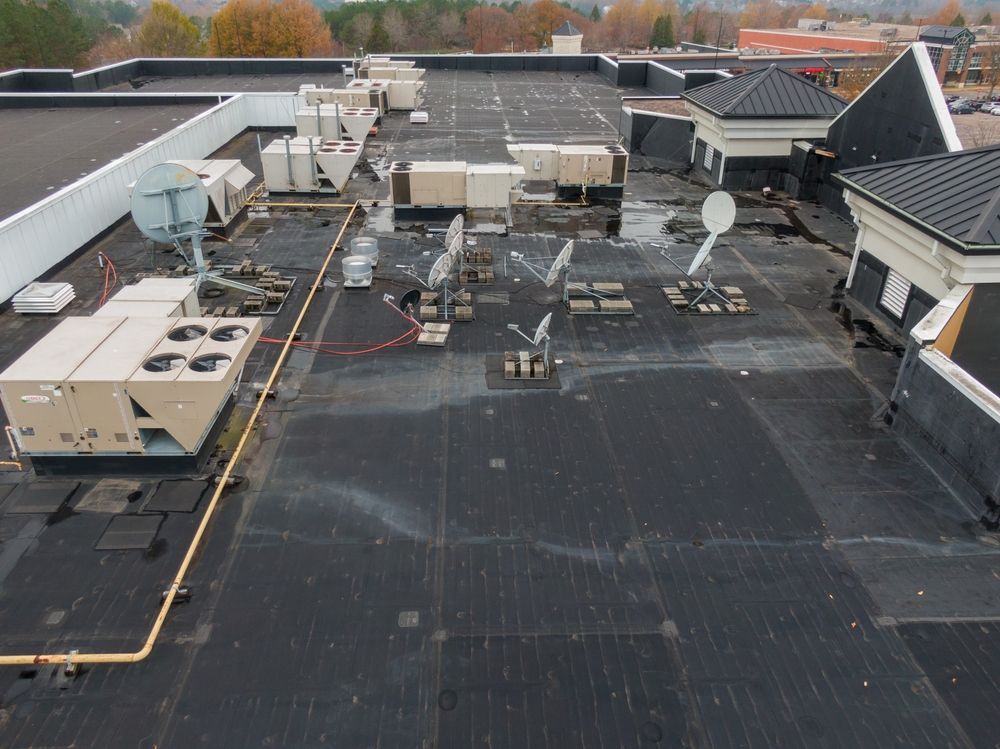
After installation, facility managers receive documentation that includes system layout diagrams, fan specifications, and maintenance schedules. You will notice vent pipes running vertically through the building or along exterior walls, and fans mounted in mechanical rooms or on rooftops. Post-mitigation testing confirms that radon levels meet safety standards, and ongoing monitoring can be scheduled to verify continued performance.
The installation is planned to avoid interference with building operations, and work is often scheduled during evenings, weekends, or low-occupancy periods. The system does not require changes to HVAC settings or ventilation schedules, but coordination with existing mechanical systems is part of the planning process. The service does not include testing or remediation of indoor air quality issues unrelated to radon, though the mitigation system may improve overall air exchange depending on building design.
Facility Managers Usually Want to Know These Details
Property managers and administrators often ask about installation timelines, how the system affects building operations, and what kind of documentation is provided for compliance purposes.
You receive system layout diagrams, fan specifications, post-mitigation test results, and a maintenance schedule. This documentation supports compliance reporting and facility management records.
If you manage a commercial property in Northeast WI and need a mitigation system designed for high-occupancy environments and complex foundations, contact Radon Safe Homes and Businesses to schedule an evaluation and receive a detailed proposal.